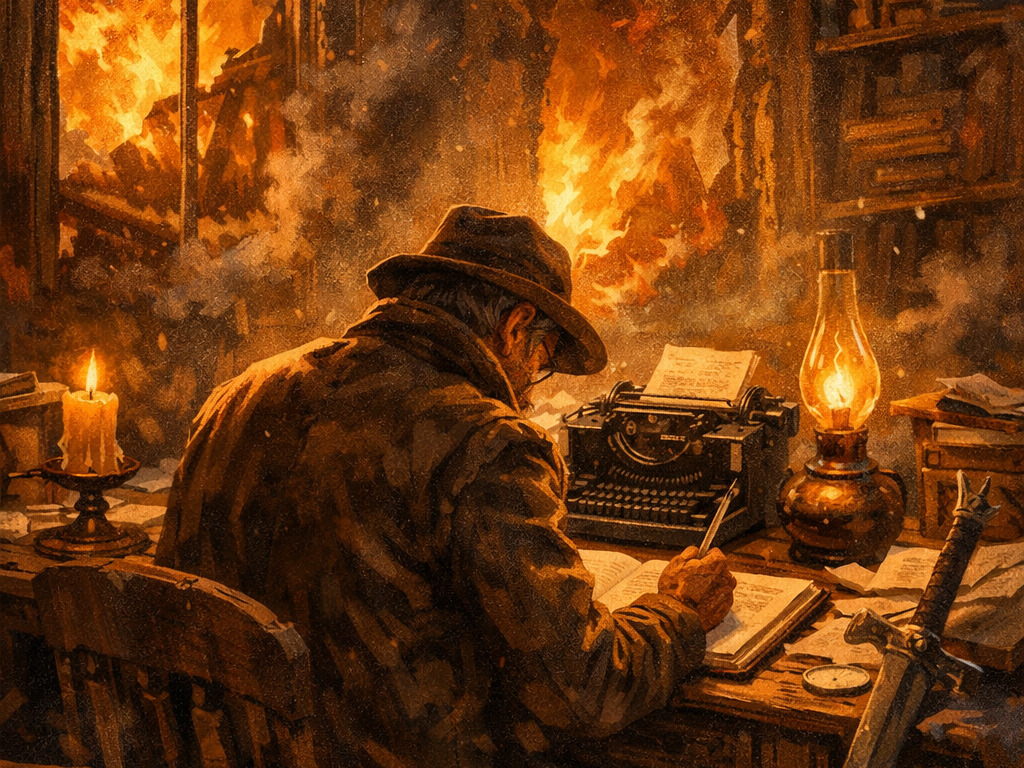

A Case for the Youth of Nigeria and Africa
In recent years, there has been a noticeable shift in how young people engage with ideas, expression, and communication. The rise of digital media has made it easier than ever to share thoughts instantly, often in short, fast-paced formats designed for quick consumption. While this evolution has expanded access and participation, it has also introduced a subtle but important consequence: the gradual decline of writing as a disciplined and reflective practice.
This shift deserves careful attention, particularly within the context of Nigeria and the broader African continent, where the stakes of expression, identity, and intellectual development remain significant.
Writing, at its core, is not merely a tool for communication. It is a method of thinking. The process of translating thought into language requires clarity, structure, and discipline. Ideas that may initially appear coherent are tested in the act of writing, often revealing gaps, inconsistencies, or opportunities for refinement. In this sense, writing does not simply record thought; it shapes it. A generation that does not write regularly risks losing one of the most effective tools for developing rigorous and independent thinking.
This concern becomes even more pressing when considered alongside the question of narrative ownership. For much of history, African stories have been interpreted and documented through external perspectives. Although there has been meaningful progress in reclaiming these narratives across various forms of media, writing continues to hold a unique and irreplaceable role. Unlike more transient formats, written work offers depth, permanence, and the ability to engage complex realities with nuance. It allows individuals to articulate context, preserve detail, and present perspectives that might otherwise be simplified or overlooked. Without a strong culture of writing among young people, there is a risk that the stories being told will lack the depth necessary to fully represent the realities they seek to capture.
It is also important to distinguish between expression and depth. The contemporary emphasis on content creation has undoubtedly encouraged creativity and visibility. However, visibility alone does not guarantee understanding. Writing demands a level of engagement that goes beyond immediate reaction. It requires the writer to organise thoughts, examine assumptions, and communicate ideas in a manner that can withstand scrutiny. This process cultivates intellectual discipline, a quality that is essential for meaningful participation in civic, professional, and cultural life.
Beyond its intellectual and cultural significance, writing also carries practical value. In professional environments, the ability to communicate clearly and persuasively often determines how ideas are received and acted upon. Whether in the form of proposals, reports, or everyday correspondence, writing remains a primary medium through which competence is assessed and influence is exercised. Individuals who are able to articulate their thoughts effectively are more likely to be understood, trusted, and given opportunities to contribute at higher levels.
There is, therefore, a broader risk associated with the declining emphasis on writing. It is not simply that fewer people may become writers in the traditional sense, but that fewer individuals may develop the capacity for sustained, critical thought. Over time, this can lead to a culture that prioritises immediacy over depth, reaction over reflection, and volume over substance. Such a culture may struggle to address complex challenges, which invariably require careful analysis, clear reasoning, and thoughtful communication.
Preserving the art of writing, then, must be approached as a deliberate effort. It requires encouraging young people to engage with writing not only as a creative outlet, but as a discipline. This can begin with simple practices such as journaling, essay writing, and reflective documentation of personal experiences. It also involves creating and supporting spaces where writing is valued, shared, and constructively critiqued. Educational institutions, digital platforms, and informal communities all have a role to play in sustaining this culture.
Equally important is the act of reading. Strong writing is often rooted in sustained exposure to well-developed ideas and diverse perspectives. Reading expands vocabulary, sharpens comprehension, and provides models of clarity and coherence that writers can learn from and build upon.
Ultimately, the preservation of writing is not about resisting change or rejecting new forms of communication. It is about ensuring that, amid rapid technological and cultural shifts, a foundational skill is not neglected. Writing remains one of the most reliable ways to develop clear thinking, preserve cultural memory, and communicate ideas with precision and impact.
For the youth of Nigeria and Africa, this is both a responsibility and an opportunity. To write is to engage deeply with the world, to document one’s reality with care, and to contribute meaningfully to the body of knowledge that will inform future generations. It is through writing that ideas are refined, perspectives are preserved, and voices are given enduring form.
In this sense, writing is not simply an art to be admired. It is a practice to be sustained.